There is no reliable ranked list of the best home builders Adelaide buyers should sign with. Rankings age, are frequently paid placements, and cannot see your site, your contract or your budget. What holds is the assessment method. This guide gives the 10 criteria that separate builders, and how to verify each one yourself.
The stakes are asymmetric. A builder selected well finishes close to the contract sum and the contracted date; one selected on headline price delivers variations, priced without competitive leverage. Below: The 10 criteria, a table of good signals against warning signs, how to read a construction programme, and a straight answer to the “top 10” question.
>>> Learn more about how to identify quality home builders
Why this guide gives criteria, not a ranked list of the best home builders Adelaide names
Because a ranking cannot be verified and does not transfer. Licence status, site personnel, solvency and workload change within a quarter, so a list published today misleads by next season. The useful question is narrower anyway: Will this builder, on this site, at this contract value, deliver what the contract says. Documents answer that; reputation does not. DX Living is a project control specialist firm, not a builder and not a directory, and does not rank building companies.
Every criterion below is checkable from paperwork a builder can supply in a week. Run the same checks on each shortlisted builder, in the same order, in writing.
The 10 criteria that separate the best house builders Adelaide offers
1. The building work contractor licence, verified on the public register
Building work contractors in South Australia are licensed by Consumer and Business Services (CBS) under the Building Work Contractors Act 1995 (SA). Do not accept a number in an email signature. Search the CBS public register and confirm the licence sits with the legal entity on the contract, matched by ABN or ACN, since a display-home brand and the contracting entity are often different companies. Check licence conditions and the nominated supervisor, and confirm current requirements at cbs.sa.gov.au.
2. Building indemnity insurance, and the gap it leaves
Building indemnity insurance is mandatory for domestic building work above a prescribed value, and the certificate must be issued in your name before work starts. From 10 November 2025 the threshold rose from $12,000 to $20,000 and the prescribed policy limit to $250,000, up from $150,000 on earlier policies (South Australian Government Financing Authority, 2025). Understand the gap: This is insolvency cover, not a defects warranty, responding broadly where the builder dies, disappears or becomes insolvent.
3. The contract type, and what a fixed price actually excludes
A fixed price is fixed against a defined scope, not the finished cost of your house, so read the exclusions before the number. Typical exclusions: Provisional sums, prime cost items, variations, latent site conditions such as rock, fill or contamination, authority and connection charges, delay costs under extension of time claims, and any rise-and-fall clause. Two protections sit alongside: A cooling off period of five clear business days, and a deposit capped at 5 per cent above $20,000.
4. Provisional sums and prime cost allowances
This is where an apparently competitive tender becomes the most expensive one. A prime cost item allows for a product not yet selected, such as tapware; a provisional sum for work not yet defined, such as site works. Both adjust to actual cost.
- Total them: Allowances above roughly 10 to 15 per cent of the contract sum make the price an estimate in a contract’s clothing.
- Fix the adjustment margin: The percentage added when an allowance is exceeded belongs in the contract.
- Ask about credits: Many apply margin on increases but return nothing on an underrun.
5. The variation clause, and how a variation is priced
Read the variation clause before the price page: It governs every decision you change after signing. Decisions resolved before tender or procurement cost nothing; the same change during construction is priced at the builder’s margin, without competitive leverage.
- Written and signed before work proceeds: No verbal instructions, no retrospective pricing.
- A rate schedule agreed at contract: Labour, common trade rates and margin fixed at signing.
- Time stated with cost: Programme impact in days on every variation, with a register issued at each progress claim.
6. The specification and finishes schedule
The specification is the contract. Drawings show arrangement; the specification decides what you receive. It should be a room-by-room schedule naming brand, product code, colour, finish, size and set-out, with lead times against long-lead items. Challenge vague language: “quality tiles”, “builder’s range”, “or equivalent”. Require written approval for any substitution, and confirm that rejecting one does not become a variation.
>>> Learn more about choosing the best home builder
7. The construction programme and liquidated damages
Ask for the programme, not the completion date. A date is an assertion; a programme is a testable argument, expressing the building period in working days, stating the weather allowance, and showing the sequence that produces the finish date. Then read the liquidated damages rate, payable for each week of late completion: A nominal rate means the date carries no commercial consequence, and broad extension of time grounds absorb delay before damages are triggered.
8. Defects liability, handover and the statutory warranty
Three protections are confused constantly. The contractual defects liability period is a short window after practical completion, usually a few months, for rectifying listed items. Handover is when the list is agreed and final payment released. The statutory warranty is separate and longer: Under section 32 of the Building Work Contractors Act 1995 (SA), proceedings for breach of the implied warranties must begin within five years of completion. Ask what retention is held until items close.
9. Referees and completed comparable work
Photography shows how a home looks, not how it was built. Ask for the last three completed projects, not the three best, and test comparability on site type, contract value band and programme duration. Choose the referee yourself, and ask numeric questions: How many variations, final account against contract sum, weeks late against the contract date.
10. Financial stability
Insolvency is the one risk no amount of finish quality compensates for. Check the contracting entity, not the brand: Search ABN Lookup for status and registration date, and the ASIC registers for company history, officeholders and external administration notices. A recently registered entity behind a long-established brand deserves a direct question. Then read the claim schedule, because value claimed ahead of work in place means your build funds the builder.
Quality home builders Adelaide: What good looks like against what a warning sign looks like
The same checklist as a scan sheet, marked live in each meeting.
| Criterion | What good looks like | Warning sign |
|---|---|---|
| 1. Licence | Verified on the CBS register against the contract ABN | A number by email; brand is not the contracting entity |
| 2. Indemnity insurance | Certificate in your name before work starts | Called a defects warranty; issued after deposit |
| 3. Contract type | Exclusions on one page, walked through | “Fixed price, don’t worry about the fine print” |
| 4. Allowances | Itemised, totalled, benchmarked; margin stated | Large round sums; no total; margin unstated |
| 5. Variations | Rates and margin fixed at contract; cost and time together | Priced at the builder’s discretion; no time impact |
| 6. Specification | Room by room: brand, code, colour, finish, size, lead time | “Builder’s range” or “or equivalent”, no approval step |
| 7. Programme | Working-day programme with dependencies; real damages rate | A date, no programme; nominal damages |
| 8. Defects and handover | Photographed schedule; retention held until closed | Verbal list; payment fully released at handover |
| 9. Referees | Last three completed projects; referee chosen by you | Testimonial page; no comparable project |
| 10. Financial stability | ABN and ACN given; claims match work in place | Front-loaded claims; oversized deposit |
What this means for your decision: Compare completed sheets, not memories of meetings. The builder scoring well across criteria 3 to 7 is the one whose final invoice resembles their tender, rarely the one with the best display home.
>>> Learn more about how to choose custom home builders in South Australia

How to read a builder’s construction programme
The programme is the document that exposes whether a build is deliverable, and most homeowners never ask for it. It exists at two levels. The master plan programme sets the delivery logic across the project and tests whether the sequence holds before contracts are signed. The programme of works is the detailed activity structure trades are held to, with dependencies visible.
- Logic links, not a list of dates: Each activity shows what must finish before it starts. A programme without logic cannot be tested, or updated when a trade slips.
- Gantt chart and resource-loaded histogram: Sequence, plus labour and plant demand over time. An undeliverable programme shows up as a peak needing more trades than the site holds.
- A written methodology: The sequence in words alongside the bars, so intent survives a change of site supervisor.
- Plan-versus-actual tracking: Progress against the baseline, with status updates showing variance while there is time to respond. Slippage found in week 8 is recoverable; at lock-up it is a claim.
Key insight: A builder who can produce a resource-loaded programme of works and report plan-versus-actual against it monthly is demonstrating a control system rather than a promise. That capability, not any ranking, separates the top tier.
This is the discipline DX Living provides as a project control specialist firm: Master plan programme and programme of works, Gantt chart and resource-loaded histogram, written methodology, cash-flow analysis, and plan-versus-actual tracking with status updates through construction. BIM connects the planning side to the visual side. See the DX Prestige module and the project collection. DX Living does not build, design or administer contracts.
Seeing the difference before you sign: VR and 3D review of materials and finishes
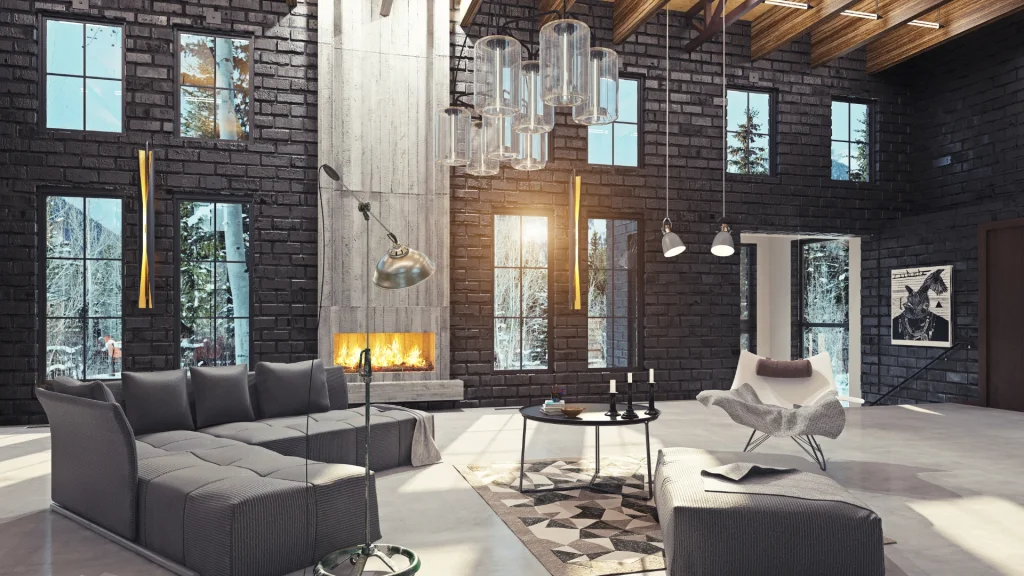
Criteria 4 and 6 depend on selections being resolved before contract, which is hard when the evidence is a sample the size of a hand. Immersive review closes that gap: Each selection is seen at full scale, in its room, under the light it will receive. Veining, tile format and joint layout read differently across a wall, and floor, joinery, benchtop, tapware and lighting temperature are approved together or approved wrongly. The output is a finishes schedule tied to model elements, so what is approved and what is specified are one list. That review is the capability DX Studio is built around; samples still confirm batch and product.
>>> Learn more about architectural visualisation Adelaide
Conclusion
Choosing among the best home builders in Adelaide is a documentation exercise, not a popularity contest. Verify the licence on the CBS register. Read the indemnity certificate for what it excludes. Total the allowances. Price the variation clause before the house. Ask for the programme of works and how plan-versus-actual will be reported. A shortlist built that way beats any list you could have read.
Ready to test a programme and lock your selections before you commit? Contact DX Living to discuss a South Australian project.
FAQs
Q: Who are the top 10 home builders in Adelaide?
A: No reliable, independent top 10 home builders in Adelaide ranking exists. Published lists are usually directory placements or advertising, are rarely re-verified, and licence status, personnel and solvency change within months. Build your own: Filter for completed work matching your site type and contract value band, verify each licence on the CBS public register, then score the 10 criteria above.
Q: How do I check a builder is licensed in South Australia?
A: Building work contractors are licensed by Consumer and Business Services under the Building Work Contractors Act 1995 (SA). Search the CBS public register and match the licence to the exact legal entity and ABN on your contract, not the display-home brand. Confirm current requirements at cbs.sa.gov.au.
Q: What does building indemnity insurance actually cover?
A: It is insolvency cover, not a quality warranty, responding broadly where the builder dies, disappears or becomes insolvent, and the certificate must be in your name before work starts. From 10 November 2025 the threshold rose from $12,000 to $20,000 and the limit to $250,000 (South Australian Government Financing Authority, 2025).
Q: How much does it cost per square metre to build in Adelaide?
A: Published square metre rates are not comparable, because scope differs: Site works, allowances, finish level and authority charges are in some and out of others. Rather than chase a rate, have every builder price the same specification and allowances schedule, then compare totals and exclusions.
Q: Are the best house builders Adelaide offers always the most expensive?
A: No. The best house builders Adelaide has are the ones whose final account resembles their tender, a function of allowance realism, variation discipline and programme control, all visible before signing. A high tender with thin allowances and a loose variation clause finishes higher than a mid tender with honest ones.
Reference
- Consumer and Business Services SA. Building work contractors licence.
- South Australian Government Financing Authority. Building indemnity insurance, homeowners: Changes effective 10 November 2025.
- Building Work Contractors Act 1995 (SA), section 32.
- Australian Business Register. ABN Lookup.
- ASIC. Search ASIC registers.
Recent Articles
The pre-contract checklist: 18 things to confirm before you sign with a builder

Planning a home cinema in Australia: What drives the cost and how to review it in VR first