Modern house design 2026: 10 trends shaping homes
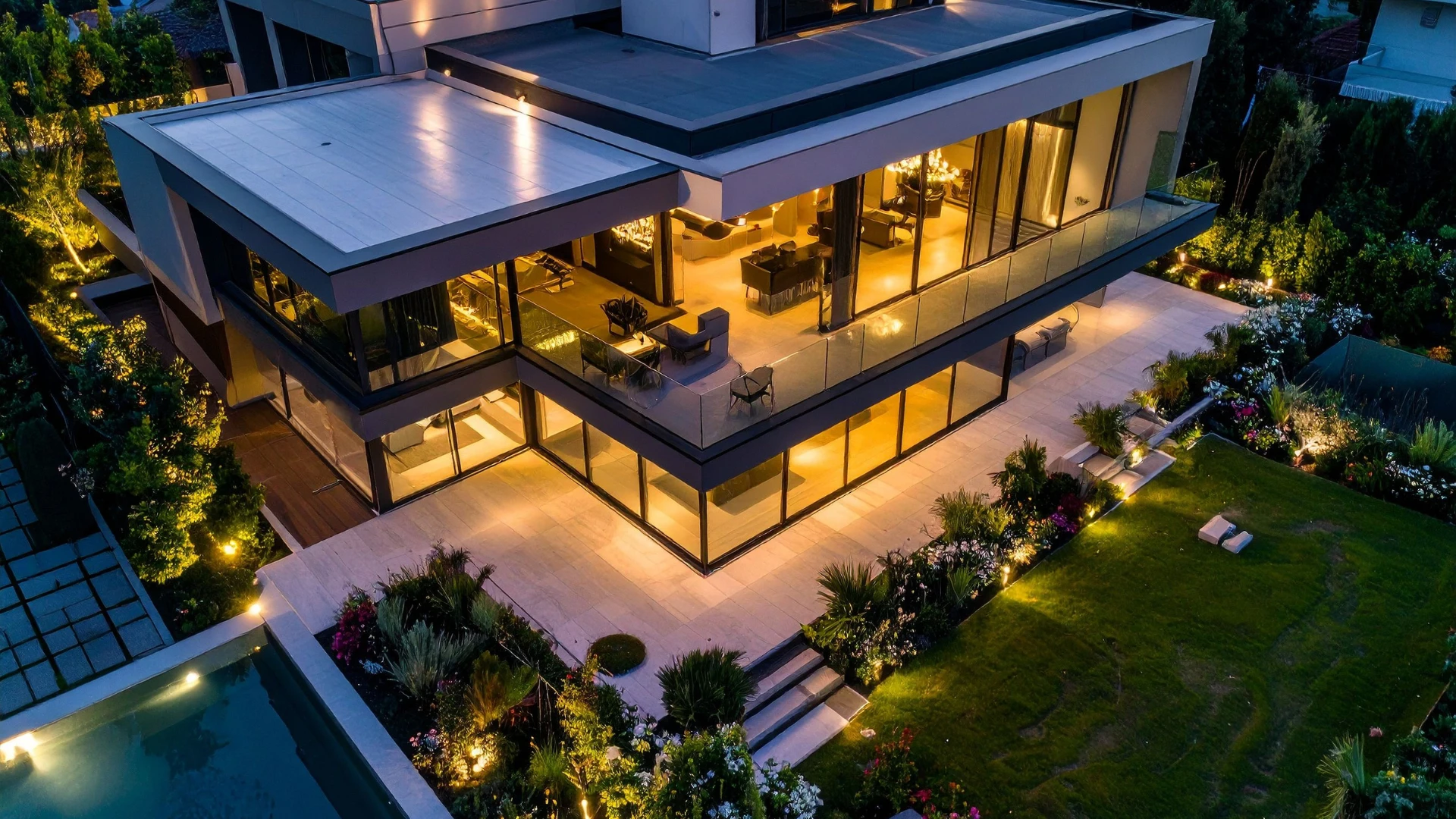
Modern house design in Australia is now set by economics and regulation as much as by taste. Construction costs, the energy provisions of the National Construction Code (NCC) 2022, and changed patterns of work and family life are pushing projects towards better envelopes, flexible layouts and technology that earns its place. Modern house design 2026 is therefore less a look than a sequence of decisions, and most of them have to be made earlier than owners expect.
This guide sets out ten trends, grounded in Australian codes, climate and cost reality, and flags which are still gaining ground into 2027. For each one it identifies what the trend asks of the building, and the point in the programme by which it has to be locked.
More: Learn more about contemporary houses: A practical guide to design, costs and planning
Key forces behind modern house design 2026 in Australia
Four forces explain almost every trend on this list: Construction cost and labour availability, the energy provisions of NCC 2022, changed household patterns, and the maturity of visualisation and BIM tooling. None is stylistic. Together they push Australian homes towards tighter envelopes, fewer but better materials, and decisions made before site.
Cost and construction constraints
Labour shortages and material volatility continue to drive prefabrication and rigorous value engineering. Off-site fabrication reduces site time, improves quality control and mitigates weather risk across Australia’s eight NCC climate zones. Standardised components, modular bathroom pods, prefabricated timber wall cassettes and factory-glazed window systems, protect margins without diluting design intent.
Climate and codes
NCC 2022 lifted the residential energy-efficiency benchmark to 7 stars under NatHERS, up from 6, and introduced a Whole-of-Home energy budget covering heating, cooling, hot water, lighting and pool or spa plant. New South Wales layers BASIX on top for energy, water and thermal comfort. Adoption and transition arrangements differ by state and territory, so confirm what applies to your site with the Australian Building Codes Board and your state authority before briefing.
Key insight: The 7-star and Whole-of-Home requirements are not a finishes question. They are settled by orientation, glazing area, shading and services selection, which means they are settled at design stage, not at colour selection.
Lifestyle shifts
Hybrid work demands rooms that convert from office to guest bedroom without renovation. Multigenerational living, common across Australian households, calls for accessible ground-floor suites with private entries. Pets and family-centred living drive material durability, acoustic separation and direct outdoor access.
Tech maturity
AI-assisted planning, BIM coordination and immersive review are delivery essentials rather than extras. Immersive walkthroughs let owners, architects and builders resolve layout, light and material questions against a shared model, which removes the most common source of late variation. The broader Australian picture is covered in this guide to architectural visualisation in Australia.
Layout and planning
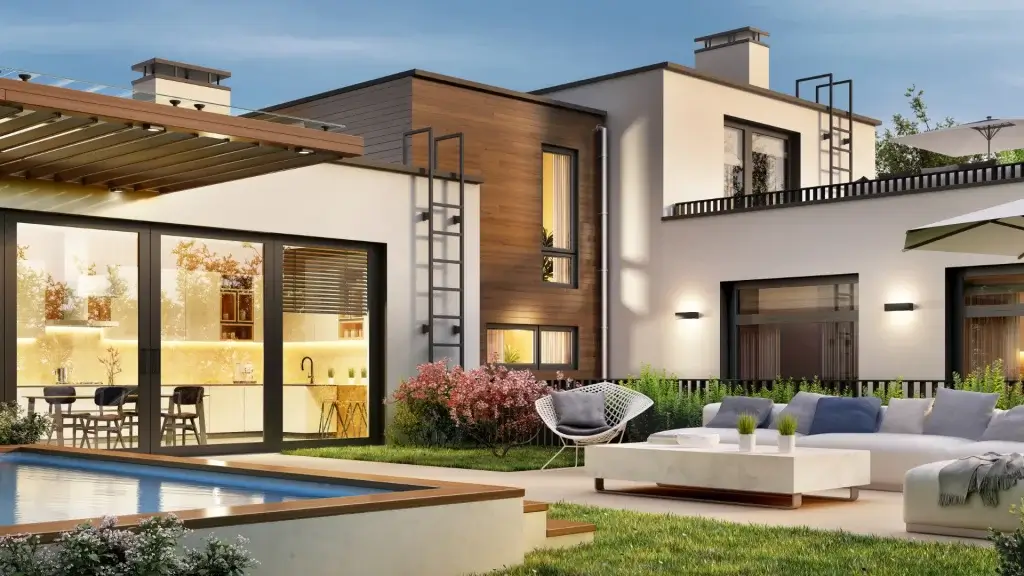
Three layout trends dominate current Australian briefs: Rooms that change use without renovation, a continuous threshold between inside and outside, and storage designed into the architecture. All three are structural or joinery decisions, which places them before tender rather than after.
1. Flexible switch-use rooms
Design rooms for at least two functions: A study that becomes a guest bedroom, a media room that doubles as a training space. Specify robust data infrastructure (Cat6 or better, fibre-ready), acoustic separation from living zones, and switchable lighting scenes. Avoid fixed built-ins that lock the room into one use.
2. Indoor to outdoor continuity
Blur the threshold with flush floor levels, wide sliding or bifold openings (3 to 6 m spans) and weather-protected transitional zones, so the outdoor room works through a Melbourne winter as well as a Brisbane summer. Wide openings affect structure and glazing performance together, which makes them a first-principles decision, not a late one.
3. Storage designed into the architecture
Mudrooms, concealed utility cupboards, butler’s pantries and appliance garages remove clutter at the source. Building storage into wall thicknesses rather than adding furniture preserves the spatial clarity that makes a contemporary home read as calm. These volumes are easy to test at full scale before framing; this 3D house design guide covers how the model is built and what it can check.
Light, glazing and comfort
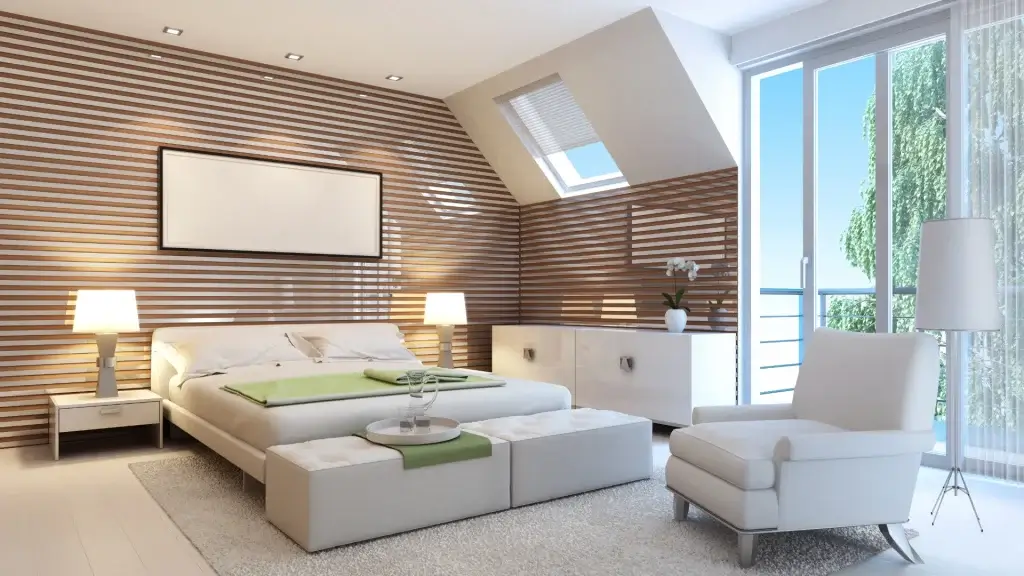
Light is the cheapest quality upgrade in an Australian home and the easiest to get wrong. Orientation and eave depth do most of the work, glazing specification does the rest, and internal blinds do almost none of it. Acoustic separation is the companion trend, because open plan without sound control is uncomfortable.
4. Human-centric lighting and external shading
Layer ambient, task and accent lighting rather than relying on a ceiling grid. Tunable-white LEDs (2700 to 5000 K) support circadian rhythms. Exterior lighting should follow dark-sky principles: Directed downward, warm (3000 K or lower), and motion-activated.
High-performance glazing (double glazed, low-e coated, argon filled, thermally broken frames) controls solar heat gain, which is decisive in Australia’s hotter zones. Pair it with external shading, because internal blinds stop light after the heat is already inside. Correct northern orientation and eave depth remain the cheapest shading strategy available.
Acoustic calm follows the same logic. Specify doors rated 30 Rw or better between zones, robust wall construction (twin-stud or staggered-stud with insulation), and soft finishes such as timber-lined ceilings and acoustic panels.
Light, glazing & comfort
Human-centric lighting
Mix ambient (recessed LED), task (linear profiles), and accent (pendants and wall sconces) lighting. Use tunable white LEDs (2700–5000K) to help with circadian rhythms. Exterior lighting must follow the rules for dark skies: it must point down, be warm (≤3000K), and turn on when someone moves.
Smart glazing & shading
High-performance glazing (triple-glazed, low-e coatings, argon/krypton fill) controls how much heat and light come in. Add external shading louvres, brise-soleil, adjustable fins, and retractable awnings to keep the room from getting too hot. Internal blinds alone don’t work for solar control.
Acoustic calm
Say that the doors should have an acoustic rating of at least 30 dB, the walls should be strong (with twin-stud and staggered joists), and the finishes should be soft (like wood ceilings, acoustic panels, and textiles). To stay comfortable in an open-plan home, you need to be careful about how sound travels.
Materials and finishes
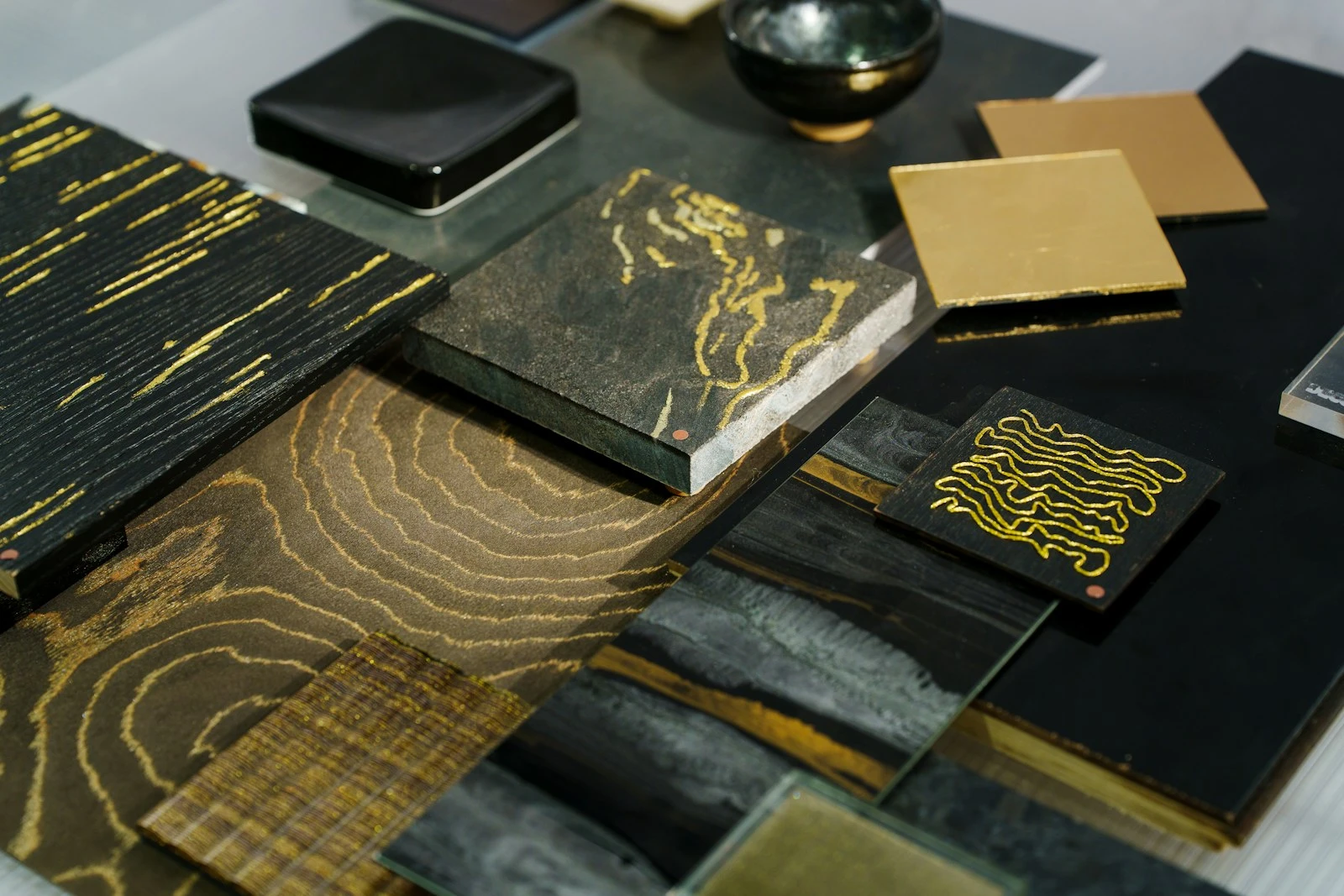
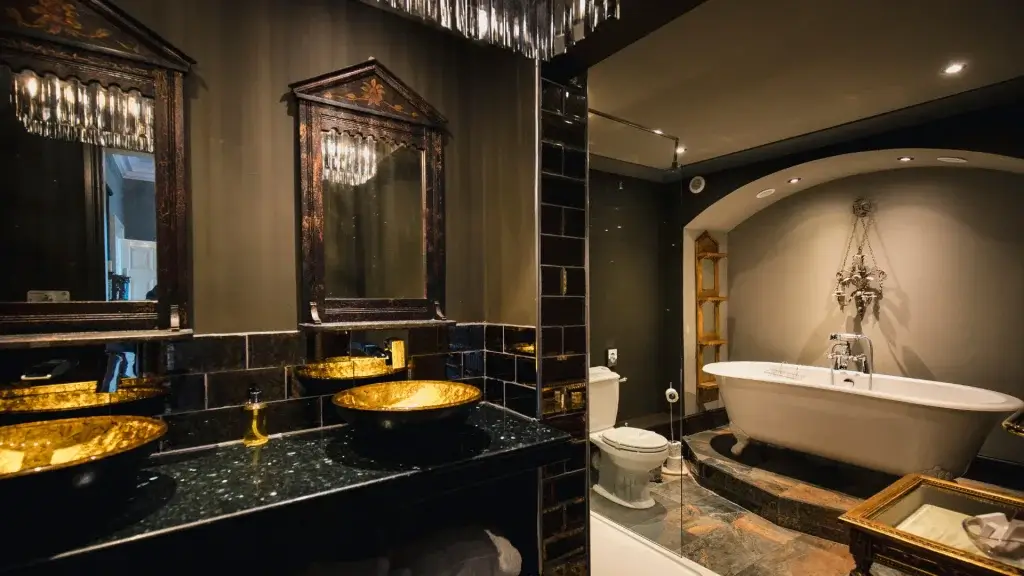
The material direction into 2027 is warm, tactile and restrained: Two to three primary materials per space, matte rather than polished, with texture doing the work decoration used to. This is where most owners change their minds, and where changing them late costs most.
5. Warm minimalism, stone and textured depth
- Timber: Wide oak boards, vertical-grain panelling and slatted screens
- Limewash: A matte, breathable wall finish with depth that flat paint cannot reproduce
- Micro-cement: Seamless, lightly textured floors and walls
- Natural stone: Limestone, travertine and honed rather than polished granite
- Sintered surfaces: Large-format slabs (up to 3200 × 1600 mm) for near-seamless benchtops and splashbacks
- Matte metals: Bronze, gunmetal and blackened steel in place of chrome
- Texture: Fluted panels, ribbed tiles, shadow-gap detailing and book-matched veneers
Sample chips misrepresent all of these, because they are judged at 100 mm under showroom light rather than across a 6 m wall under the room’s real orientation. The failure modes, and how to avoid them, are set out in this guide to interior finishes.
What this means for your decision: Review finishes at full scale, in the room’s real light, before the order goes in. A stone selection reversed after slab delivery is a purchase, not a preference.
High-function, low-noise kitchens and bathrooms
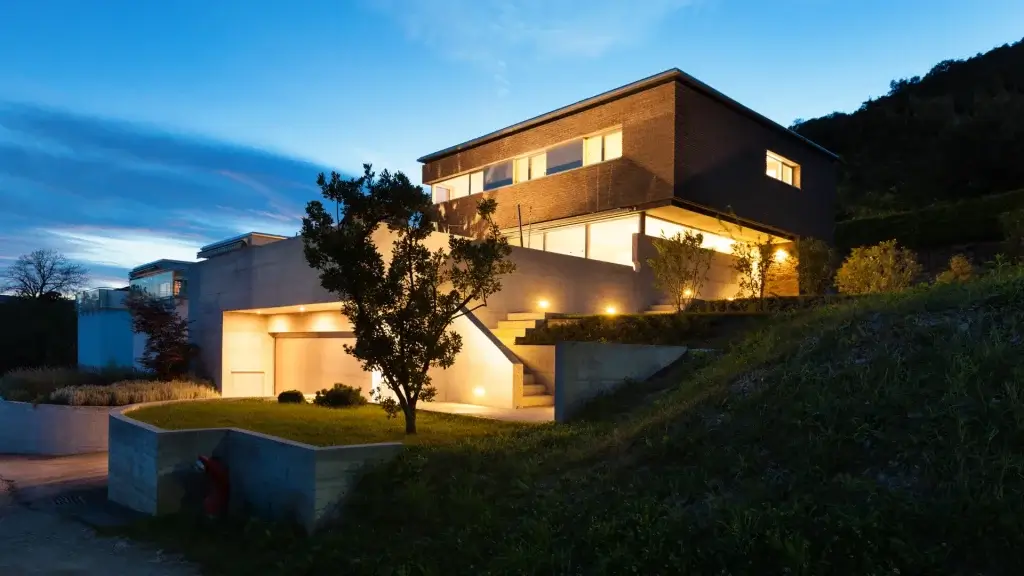
6. Hidden utility and spa-grade wet areas
- Integrated appliances: Flush-mounted ovens, concealed extractors and panel-ready refrigeration
- Walk-in or butler’s pantries: A separate prep and appliance zone keeps the main kitchen uncluttered
- Walk-in wet rooms: Linear drains, frameless glass and level, step-free access
- Thermostatic mixers: Precise control and anti-scald protection
- Touch-free fixtures: Sensor taps and motion-activated lighting
Induction cooking is now the default under the all-electric direction of NCC 2022’s Whole-of-Home provisions. Pair it with extraction sized at a minimum of 750 m³/h in open-plan kitchens, and confirm the ducting route early, because it competes with structure and services in exactly the ceiling zone everyone wants to keep flat.
Interior design trends in Australia: Colour and styling
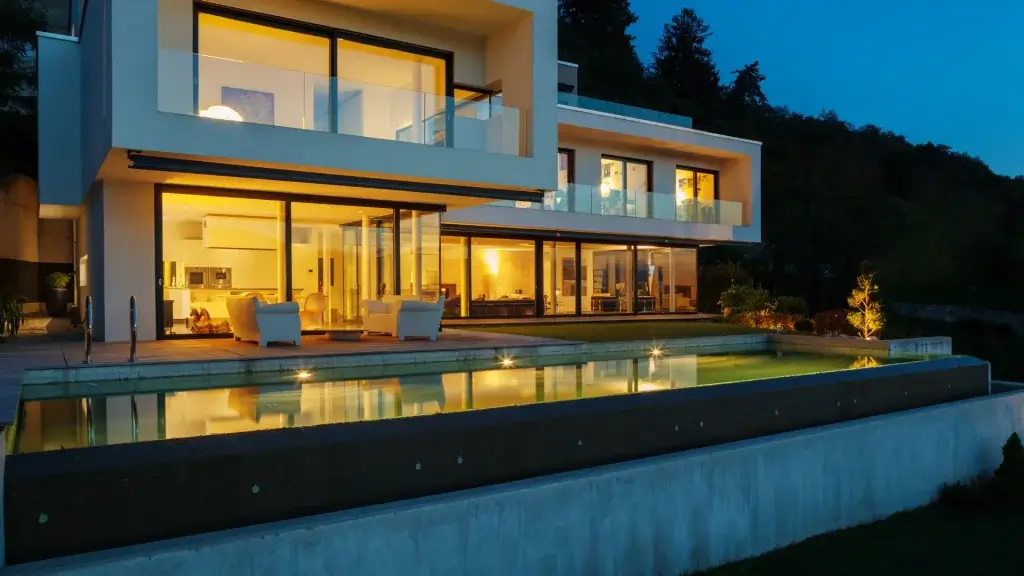
7. Earth neutrals and quiet luxury
- Base: Warm greys, taupes and off-whites, moving away from stark white
- Accents: Muted greens (sage, olive), oxblood, indigo and terracotta
- Metal tones: Bronze, brass and blackened steel
Quiet luxury remains the dominant direction in Australia’s premium market into 2027: Fewer objects, better quality, spatial generosity instead of decorative volume. It only reads correctly when the palette is judged in context rather than on a mood board. For the wider picture, see six home design trends shaping Australia in 2026.
Sustainability and systems
8. All-electric readiness, envelope first
Fabric performance comes before generation. Specify strong Total R-values for the climate zone, eliminate thermal bridging at balconies, junctions and lintels, and reduce air leakage. Passive House targets 0.6 ACH at 50 Pa, a useful benchmark even for homes that will never be certified. Only then add:
– Heat pumps (air-source or ground-source) with a COP of 3.0 or better
– Solar PV and battery storage, typically 6.6 to 13 kW arrays with 10 kWh-plus batteries, installed under the Clean Energy Council accreditation framework
– EV charging at 7 to 22 kW, with cabling provisioned for future demand
– Water: 2,000 to 5,000 L rainwater tanks for toilets, laundry and irrigation, greywater reuse, and water-wise native planting, which also assists BASIX water targets in NSW
Every item on that list occupies space, adds load and needs a route. That is a services coordination question, which is why this trend cannot wait for selections stage.
The technology that matters in 2026 and into 2027
9. Visualisation-led delivery: VR, 3D, 4D and BIM
Smart home first: Standardise on one protocol (Matter, KNX or Lutron) across lighting, climate, blinds and security, and build scenes rather than an app per device. Proprietary ecosystems are the most reliably obsolete thing in a new home.
The larger shift is in how decisions get confirmed. Immersive review in DX Studio lets owners, architects and builders walk a full-scale model, test two layouts against each other, and see a material under the room’s real orientation before anything is ordered. Linking that model to the master plan programme adds the fourth dimension: Clash detection, site logistics and plan-versus-actual tracking against a Gantt chart, so the sequence is proven before trades are booked. The checks that make a model useful to a builder rather than merely attractive are covered in pre-construction visualisation and construction readiness.
Outdoor rooms and landscape
10. Year-round outdoor rooms and water-wise planting
- Louvred roofs: Adjustable protection from sun and rain
- Radiant heaters and misting: Cooler-month and summer usability
- Outdoor kitchens: Built-in sinks, barbecues and refrigeration, meaning water, waste, power and ventilation to an external wall
- Native, drought-tolerant planting: Layered for privacy, with mulch, drip irrigation and permeable paving
Budget, programme and the decisions that must land before tender
As an indicative market range only, architect-designed and custom homes in Australia broadly sit between around A$3,500 and A$7,000-plus per m², with premium builds in Melbourne and Sydney above that. Source: Rawlinsons Australian Construction Handbook, 2024 edition. Prefabricated and modular delivery can reduce cost by roughly 10 to 20 per cent against traditional construction. Treat every figure as indicative until quantities are confirmed against a resolved design.
Where to prioritise spend: Glazing, envelope and bespoke joinery. Where to value-engineer with least loss: Internal finish substitutions, mid-tier rather than ultra-premium tapware and lighting, and phased landscaping.
The programme point matters more than the cost point. Trends that touch structure or services, wide openings, storage built into walls, ducted extraction, battery and EV provisioning, outdoor kitchen services, must be resolved before the project goes to tender, because they change quantities and trade sequence. Decisions resolved before tender or procurement cost nothing; the same change during construction is priced at the builder’s margin, without competitive leverage.
Summary table: The ten trends and when each must be decided
| # | Trend | What it affects | Decide by |
|---|---|---|---|
| 1 | Flexible switch-use rooms | Layout, data, acoustics | Design development |
| 2 | Indoor to outdoor continuity | Structure, glazing, levels | Before tender |
| 3 | Storage in the architecture | Wall build-ups, joinery | Before tender |
| 4 | Lighting and external shading | Façade, orientation, electrical | Before tender |
| 5 | Warm minimalist materials | Cost, lead times | Before procurement |
| 6 | Kitchens and wet areas | Services, ducting, waterproofing | Before tender |
| 7 | Earth neutrals and quiet luxury | Finishes schedule | Before procurement |
| 8 | All-electric, envelope first | NatHERS rating, services loads | Design development |
| 9 | Visualisation-led delivery | Programme, variation risk | Before tender |
| 10 | Outdoor rooms and landscape | Services to boundary, drainage | Before tender |
Test the trends you want before you commit to them
Most people finish a list like this wanting five or six of these trends at once, and that is the point at which they get expensive. A wider opening, a darker joinery palette, a battery, a ducted extractor and a level-access wet room each look like a preference on paper. In combination they are a structural, services and programme change.
The way to resolve that is to build the design once, in a model, and walk it. Immersive review in DX Studio lets you stand in the room at full scale, compare two layouts, judge a stone under the room’s real orientation, and confirm which of the ten trends you actually want, while changing your mind still costs nothing. Sequencing the confirmed design against the programme then shows whether those choices are buildable in the timeframe you have.
Contemporary home design rewards conviction, and conviction is easier when the decision has been seen rather than imagined. To review your project before it goes to tender, contact DX Living and see the work in DX Living’s project collection.
FAQ
Q: What defines modern house design 2026?
A: Modern house design 2026 in Australia prioritises energy performance under NCC 2022, spatial flexibility for hybrid work and multigenerational households, warm and tactile materials in place of stark white, and technology-enabled delivery. The emphasis has moved from decoration to performance, comfort and certainty, with immersive review used to confirm decisions before construction begins.
Q: Are these trends still relevant into 2027?
A: Yes. Every trend on this list is driven by regulation, cost or household structure rather than by fashion, and none of those drivers reverses within a year. The material palette will keep warming, all-electric provisioning will keep tightening, and visualisation-led delivery will keep expanding. A brief written to this list now will still read as current in 2027.
Q: What are the biggest home design trends in Australia right now?
A: All-electric, envelope-first sustainability at 7-star NatHERS and beyond; flexible layouts; warm minimalist materials such as timber, limewash and micro-cement; quiet luxury interiors in earth neutrals; year-round outdoor rooms; and visualisation-led delivery using VR, BIM and 4D programming.
Q: What does NCC 2022 mean for a new home in Australia?
A: NCC 2022 raised the minimum residential energy-efficiency standard to 7 stars under NatHERS and introduced a Whole-of-Home energy budget covering heating, cooling, hot water, lighting and pool or spa plant. In New South Wales, BASIX applies as well. Adoption and transition arrangements vary by state and territory, so confirm the requirements for your site with the ABCB and your state authority.
Q: How much does a modern house cost to build in Australia?
A: As an indicative market range only, architect-designed and custom homes broadly sit between around A$3,500 and A$7,000-plus per m², depending on specification, site conditions and location, with premium builds in the major cities higher. Source: Rawlinsons Australian Construction Handbook, 2024 edition. Confirm against a resolved design and measured quantities before relying on any figure.
Q: Which of these trends has to be decided before tender?
A: Anything that changes structure, services or trade sequence. Wide openings, storage built into wall thicknesses, ducted extraction, battery and EV provisioning, level-access wet areas and services to an outdoor kitchen all alter quantities. Confirmed before tender, they are priced competitively. Introduced afterwards, they are variations.
Q: How long does it take to build a modern house in Australia?
A: Most custom builds run roughly 12 to 20 months from contract to handover, depending on site complexity, size and procurement route. Prefabricated or modular delivery can compress this to around 8 to 12 months. Locking the design early and coordinating it in BIM removes the variation cycles that cause most programme slippage.
References
- Australian Building Codes Board (ABCB). National Construction Code (NCC) 2022.
- Nationwide House Energy Rating Scheme (NatHERS). 7-star residential energy efficiency.
- Australian Government. Your Home: Guide to environmentally sustainable homes.
- NSW Government. BASIX (Building Sustainability Index).
- Clean Energy Council. Solar PV and battery storage guidance.
- Australian Passive House Association. Passive House design principles.
- Sustainability Victoria. Building and renovating for energy efficiency.
- Rawlinsons Australian Construction Handbook (2024 edition). Rawlhouse Publishing.
- NATSPEC. National BIM Guide.
Recent Articles
Reviewing an Adelaide residential development before build: What developers check in 3D
How to check a home builder in Adelaide is actually quality