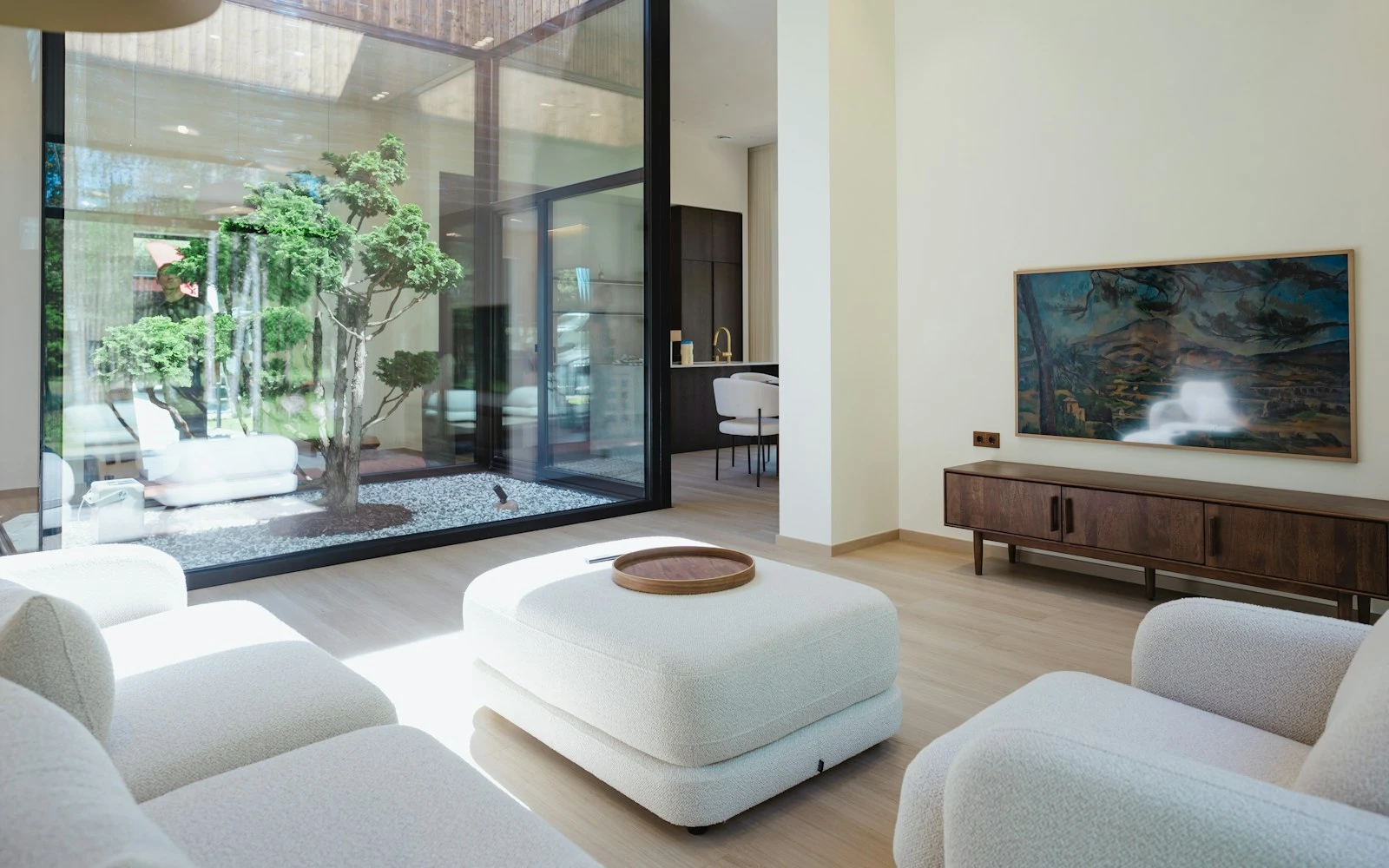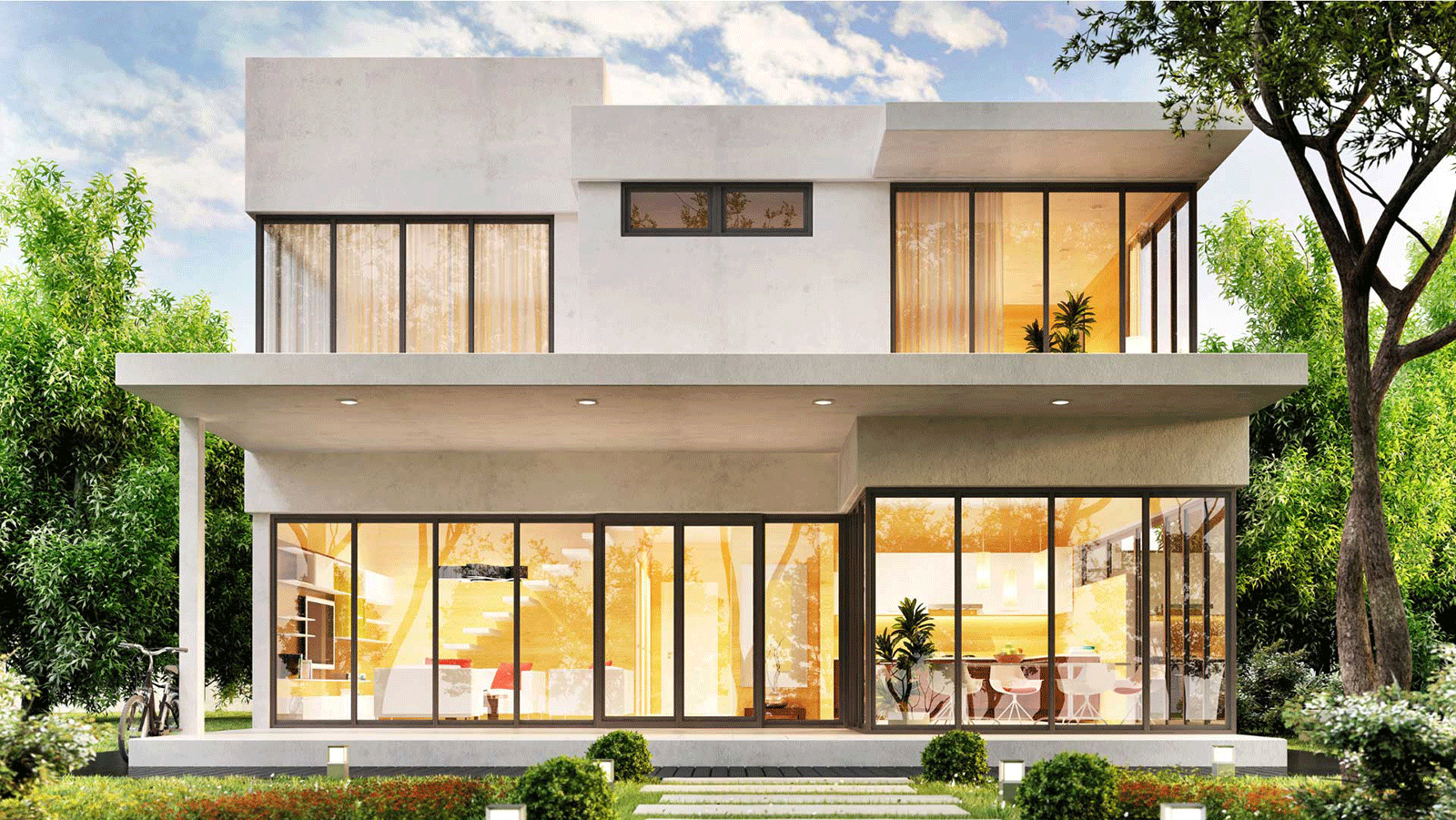
Contemporary houses sit at the intersection of current architectural thinking, evolving lifestyles, and stricter performance expectations. Rather than chasing a single visual style, they prioritise how space works, circulation, light, outlook, and comfort within real-world constraints of budget, codes, and constructability. The sections below break down how that translates into planning moves, material choices, and technical decisions for today's projects.
What is a contemporary house?
A contemporary house reflects current architectural thinking rather than adherence to a fixed stylistic movement. Characterised by clean geometries, open-plan living, generous glazing, and restrained material palettes, contemporary residential design emphasises spatial quality, natural light, and contextual response.
Some of the most crucial features are:
- Making shapes that are easier to understand and don't have a lot of extra adornment on them
- Layouts with open spaces that prioritize fluidity and adaptability
- A lot of windows to let in as much light as possible and interact with the view outside.
- There are no extra finishes on the concrete, wood, steel, or glass.
- Sustainability that includes high-performance envelopes, technologies that can be used again, and design that adapts to climate change
Modern architecture is continually changing because it uses new technologies, meets the needs of the environment, and adapts to changing lifestyles. This means that it can change instead than being set in stone.
Contemporary vs. Modern: Key differences
Though often conflated, contemporary and modern architecture differ fundamentally:
| Aspect | Modern | Contemporary |
|---|---|---|
| Period | Early-to-mid 20th century movement | Present day, continually evolving |
| Philosophy | Form follows function; rejection of ornament | Contextual, flexible, pragmatic |
| Materials | Industrial steel, glass, concrete | Diverse includes natural, engineered, recycled |
| Sustainability | Not a primary concern | Integrated from inception |
| Flexibility | Strict formal rules | Adaptive, site-responsive |
Modern architecture was a philosophical break from historicism. Contemporary design synthesises multiple influences sustainability, technology, cultural context without ideological rigidity.
Planning steps for contemporary houses
Site analysis & orientation
Conduct thorough site surveys: topography, solar path, prevailing winds, views, access, constraints (trees, easements, drainage). Orientation dictates passive solar gain, natural ventilation, and privacy fundamental to contemporary design performance.
Design brief & budget
Define spatial requirements, performance targets (energy, acoustics), material preferences, and cost ceiling early. Contemporary houses demand rigorous budget discipline glazing systems, bespoke joinery, and engineered solutions escalate costs rapidly without value engineering.
Layout & spatial flow
Prioritise open-plan living zones with defined service cores (kitchens, bathrooms, storage). Avoid corridors contemporary planning emphasises multi-functional circulation spaces. Consider sight lines, acoustic separation, and future adaptability.
Glazing & natural light strategy
Size and position openings to maximise useful daylight whilst managing solar gain and thermal performance. Specify high-performance glazing (low-e, argon-filled, thermally broken frames). Coordinate with structural engineers early large spans demand substantial lintels or steel frames.
Material palette
Select materials for durability, thermal performance, and aesthetic cohesion. Contemporary palettes typically combine 2–3 primary materials (e.g., brick, timber cladding, render) with complementary accents. Avoid material overload restraint distinguishes contemporary design from eclecticism.
Sustainability & performance
Integrate low-carbon strategies: enhanced insulation (U-values ≤0.15 W/m²K for walls), airtightness (≤3 m³/h/m² @50Pa), MVHR, renewable heating (ASHP/GSHP), PV arrays. Future Homes Standard compliance is now baseline design beyond minimum compliance for longevity.
Detailed selections & sign-offs
Coordinate finishes, fixtures, joinery, and M&E equipment. Use detailed specifications and samples to align stakeholder expectations. Immersive visualisation tools such as DX Living's photorealistic walkthroughs reduce costly late-stage changes by validating design decisions early.
A guide to the costs of modern homes
Coordinate finishes, fixtures, joinery, and M&E equipment. Use detailed specifications and samples to align stakeholder expectations. Immersive visualisation tools such as DX Living's photorealistic walkthroughs reduce costly late-stage changes by validating design decisions early.
- Basic modern spec: £2,500–£3,000/m² (standard glazing, render/brick, and regular M&E)
- Mid-range specification: £3,000–£3,800/m² (large-format glazing, engineered wood, ASHP, and better airtightness)
- High-end construction: £3,800–£4,500/m² (custom facades, automated systems, underfloor heating, and high-end finishes)
- Exceptional/architect-led: £4,500+/m² (complex shapes, structural glass, and advanced environmental systems)
Detailed selections & sign-offs
- The type and amount of glazing
- Structural complexity (exposed steel/concrete, cantilevers)
- The level of sophistication of MEP (MVHR, smart controls, renewables)
- Custom-made joinery and furniture that fits
- Conditions on the ground and access to the site
- Getting input from a QS early on in the cost planning process stops specifications from changing and budgets from going over.
Materials & finishes
Detailed selections & sign-offs
- Polished concrete: strong, has a lot of thermal mass, and looks industrial.
- Engineered oak: warmth, sound comfort, and wide planks that go well with open plans
- Large-format porcelain looks smooth, is easy to care for, and works well with underfloor heating.
Wall finishes
- Smooth render (monocouche/silicone): clean lines that don't get damaged by the weather
- Timber cladding (larch, cedar): has a natural texture, lasts a long time, and looks good in all kinds of weather.
- Brick (thin/wirecut): long-lasting, easy to care for, and fits in with its surroundings
Kitchens
- Flush profiles and built-in appliances for handleless units
- Engineered stone and composite worktops are seamless, long-lasting, and clean.
- Island layouts: make areas without walls, make it easier for people to talk to each other
Lighting
- LED downlights that are recessed: don't take up much space and save energy
- Linear profiles: highlight the shapes of buildings
- Pendant lights: sculptural focal points in rooms with two levels
Bathrooms
- Walk-in wet rooms: easy to get to, big, and modern looking
- Wall-hung sanitaryware makes cleaning easier and makes spaces feel bigger.
- Big tiles: fewer grout lines and a smooth look
Materials & finishes
| Mistake | Quick Fix |
|---|---|
| Oversized glazing without solar control | Add external louvres, brise-soleil, or specify solar-control glass |
| Inadequate thermal bridging details | Coordinate structural/facade interfaces; specify thermal breaks at junctions |
| Poor acoustic separation in open plans | Introduce acoustic ceilings, soft furnishings, or selective partitions |
| Undersized plant rooms | Limit primary materials to 2–3; use restraint for visual coherence |
See your contemporary house before you build
Planning a contemporary house demands confidence in spatial quality, material interaction, and stakeholder alignment. DX Living's immersive 4D visualisation platform lets you explore your design in photorealistic detail validating layouts, testing finishes, and refining decisions before breaking ground.
Eliminate costly revisions. Secure stakeholder buy-in. Deliver with certainty. Contact us today to experience your contemporary house in stunning, interactive detail.
FAQsHow much does a contemporary house cost to build in the UK?
Planning a contemporary house demands confidence in spatial quality, material interaction, and stakeholder alignment. DX Living's immersive 4D visualisation platform lets you explore your design in photorealistic detail validating layouts, testing finishes, and refining decisions before breaking ground.
Are contemporary houses warm?
Yes when designed correctly. High-performance envelopes, airtightness, MVHR, and efficient heating systems (ASHP/GSHP) deliver excellent thermal comfort. Large glazing requires careful solar control to avoid overheating.
How long does it take to build a contemporary house?
12-24 months depending on size, complexity, and procurement route. Traditional build (masonry/timber frame) typically takes 12-16 months; complex engineered structures may extend to 24 months.
Recent Articles
The pre-contract checklist: 18 things to confirm before you sign with a builder
Planning a home cinema in Australia: What drives the cost and how to review it in VR first